15 More Eyebrow-Arching Discoveries From This Vast Universe of Ours

Well, you’ve done it again, Universe. You’ve gone and given us another batch of top-notch discoveries. We guess we should thank the fine folks with those massive telescopes, too. Their lifelong quest to bring the cosmos to us is greatly appreciated, and boy do we love relaying the goods to you guys.
Our telescopes aren’t nearly as big, so we just have to live vicariously through astronomers. Maybe one day we’ll get the gall to quit this gig and knock on an observatory’s door with a resume. Of course, it’d only have “backyard observer” on it, but since kids with “babysitting” on their resumes get hired at Taco Bell all the time, this is really no different. For now, all we can do is enjoy the 15 new discoveries that the pros (and our future mentors) have to offer.
Astronomers spot the longest rotating structure ever seen
NASA & Facebook
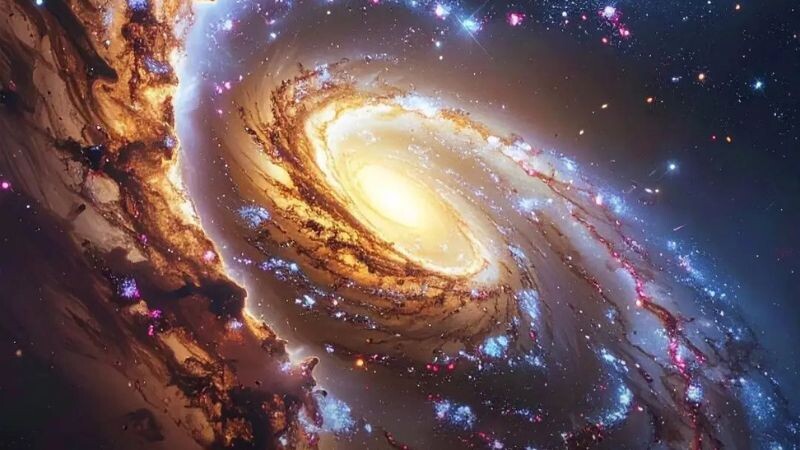
In early December 2025, astronomers discovered the universe's longest rotating structure, nicknamed the "galactic tornado." It’s a cosmic filament of galaxies and dark matter stretching 49 million light-years long, about 140 million light-years away.
The brightest black hole flare ever recorded
Caltech/R. Hurt (IPAC) (Artist’s Rendering)
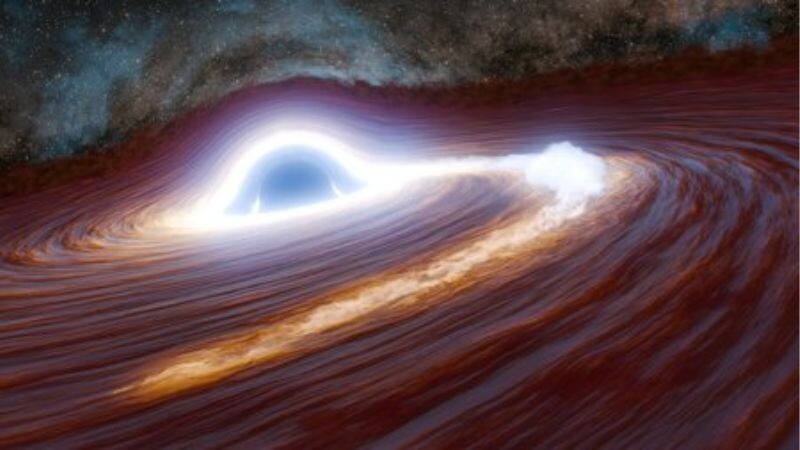
Detailed in November 2025, the flare known as "Superman" was observed shining with the light of 10 trillion suns — making it the brightest ever recorded. It was likely caused by a supermassive black hole devouring a huge star at a distance of 10 billion light-years away.
They’ve found a glitch in the universe’s timeline
Deep Universe & Facebook
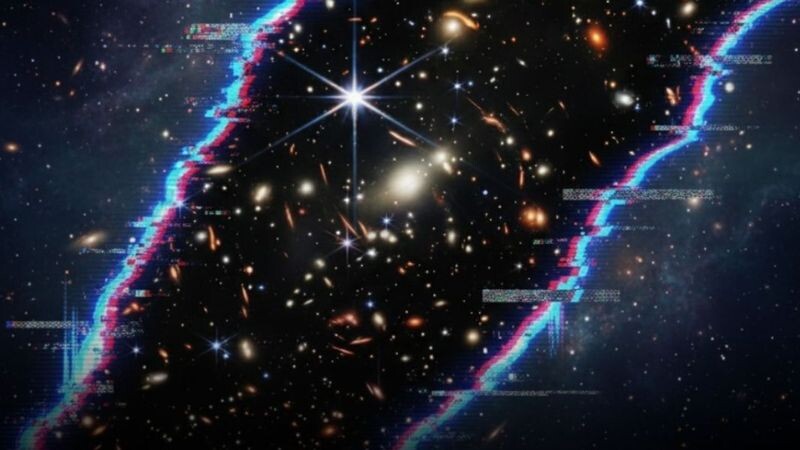
The James Webb Telescope found what scientists are calling a “glitch” in the timeline of the universe. It was detected while observing distant galaxies, and Deep Universe says, “Their age and structure don’t match current models of cosmic evolution, as if parts of the universe are slightly ahead or behind schedule.”
53 new supermassive black hole-powered quasars
Pal, et al (2025)
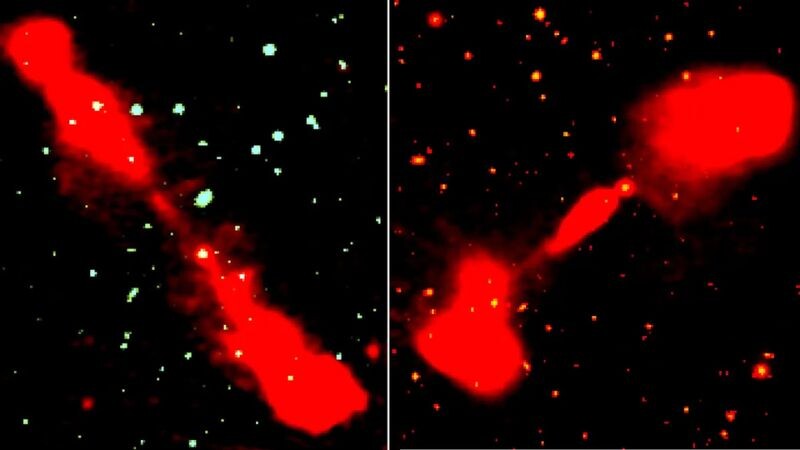
Astronomers have discovered quasars so big that they blast out jets of matter that stretch out for up to 7.2 million light-years (50 times the width of the Milky Way). They are part of a group of 369 radio quasars recently discovered by Indian astronomers in data collected by the Giant Meterwave Radio Telescope.
Stars are being shot out of our galaxy
Shutterstock
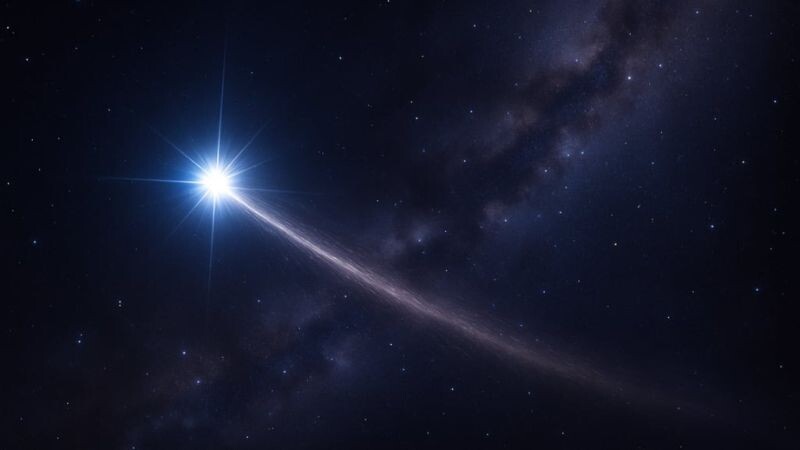
A rare class of stars called hypervelocity stars moving at speeds of 2,000 kilometers per second have broken free from the Milky Way entirely. This happens when two stars orbit each other in a binary system. If one star is captured in a tight orbit near a black hole, it causes the other to be flung outward like a stone from a cosmic slingshot.
A huge “blob” of dark matter was found closeby
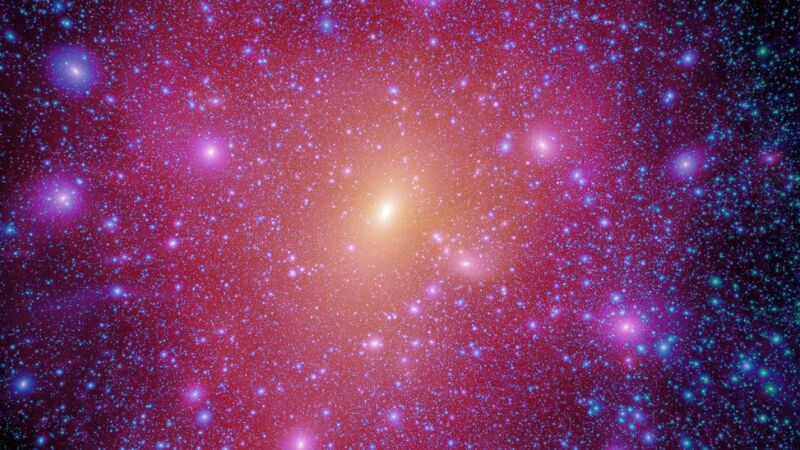
In July 2025, astronomers found a mass of invisible dark matter millions of times greater than the Sun. It’s so close in the Galaxy that, if you could see it, it would be larger in the sky than the Sun or Moon.
They’ve detected the most massive black hole merger ever
MAX PLANCK INSTITUTE FOR ASTROPHYSICS
In July 2025, LIGO (the Laser Interferometer Gravitational-wave Observatory) detected a powerful merger that produced a final black hole approximately 225 times the mass of our Sun. Its detectors have observed about 300 black hole mergers in total since 2015.
They’ve found a “Super Earth” covered entirely in water

Neil deGrasse Tyson & Facebook
Planet TOI-1452 b is 70% larger than Earth and about 100 light-years away. It is a massive "water world" with no land — just a global ocean potentially hundreds of kilometers deep.
One observatory is finding millions of new galaxies

NSF–DOE Vera C. Rubin Observatory
After decades of preparation, the Vera C. Rubin Observatory released its first images to the world in a live stream on June 23, 2025. The staggering first images show 10 million galaxies — and they say that billions more are on the way. This image is just a portion of its view of the Virgo Cluster, amd each object you see is a galaxy (or a galaxy cluster).
A strange planet is orbiting even stranger stars
ESO/L. Calçada
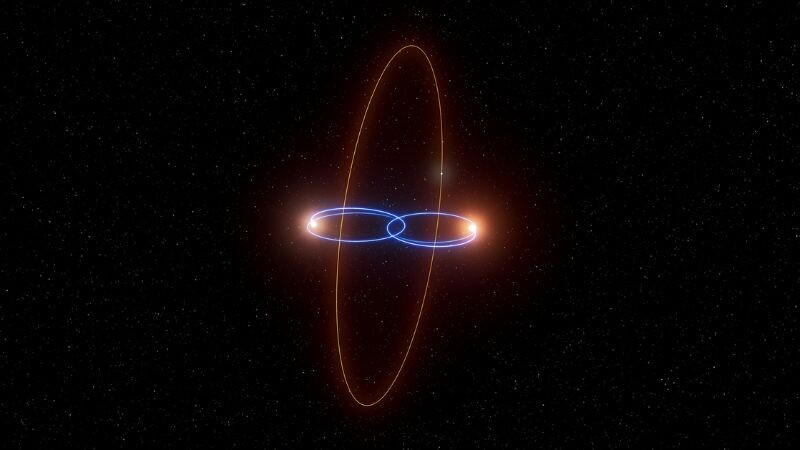
Discovered in April 2025, a planet known as 2M1510 (AB) b is among the strangest ever found. It vertically orbits far above two brown dwarf stars, and stranger yet, the two dwarf stars also orbit each other. Strangest yet, a third brown dwarf star orbits the other two at an extreme distance.
The Sun emitted a strong solar flare on Dec. 8, 2025
NASA/SDO
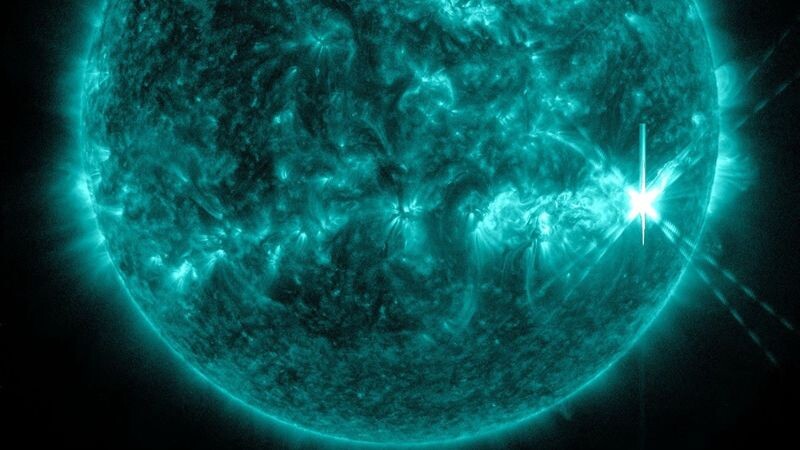
Peaking at 12:01 a.m. on Dec. 8, 2025, NASA’s Solar Dynamics Observatory captured an image of the event. Solar flares are powerful bursts of energy, and this one is classified as an X1.1 flare. X-class denotes the most intense flares.
An extraordinary cosmic outburst
Astronomers have been poring over a flood of data after they detected a huge event on July 2, 2025. While most gamma ray bursts last only a minute, this one continued for days. Scientists say the best explanation is that a black hole consumed a star, but they disagree on exactly how it happened.
NASA spotted a cosmic “wreath”

Image Credit: X-ray: NASA/CXC; Infrared: ESA/Webb, NASA & CSA
NGC 602 is a star cluster on the outskirts of the Small Magellanic Cloud (one of the closest galaxies to the Milky Way). This image combines X-rays from NASA's Chandra X-ray Observatory and infrared data from NASA's James Webb Space Telescope to get the clearest image of it to date.
An image of the Vela Molecular Ridge
NASA/JPL-Caltech
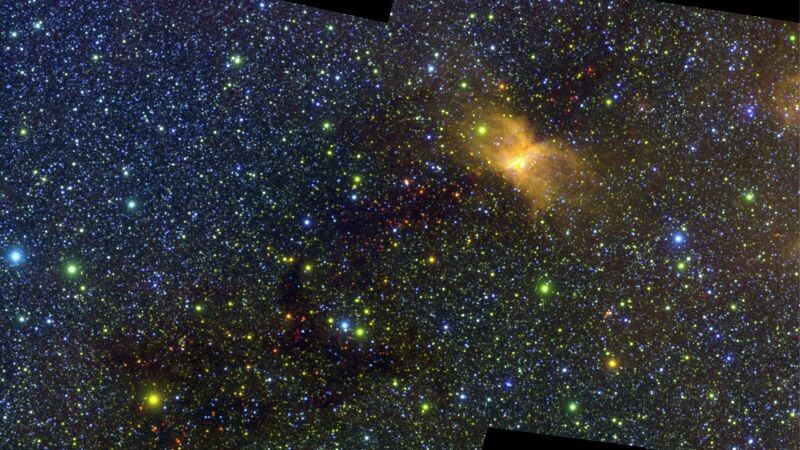
This image was captured by NASA's SPHEREx and was part of the mission's first public data release on July 2, 2025. The yellow patch on the right is emission nebula RCW 36 — a cloud of interstellar gas and dust that glows in some infrared colors due to radiation from nearby stars.
They’ve found the oldest supernova of all time
NASA, ESA, CSA, STScI
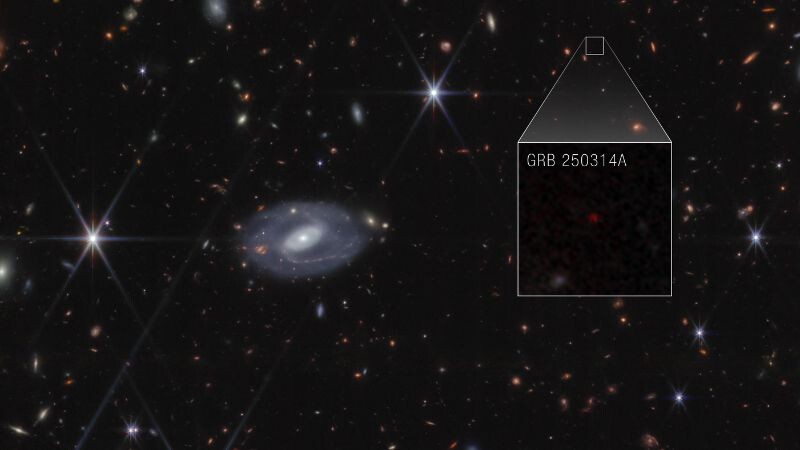
In July 2025, NASA’s James Webb Telescope captured a supernova that exploded when the universe was only 730 million years old — the earliest detection of its kind to date. Data collected from Webb’s images in December 2025 allowed astronomers to locate the supernova’s faint host galaxy.
